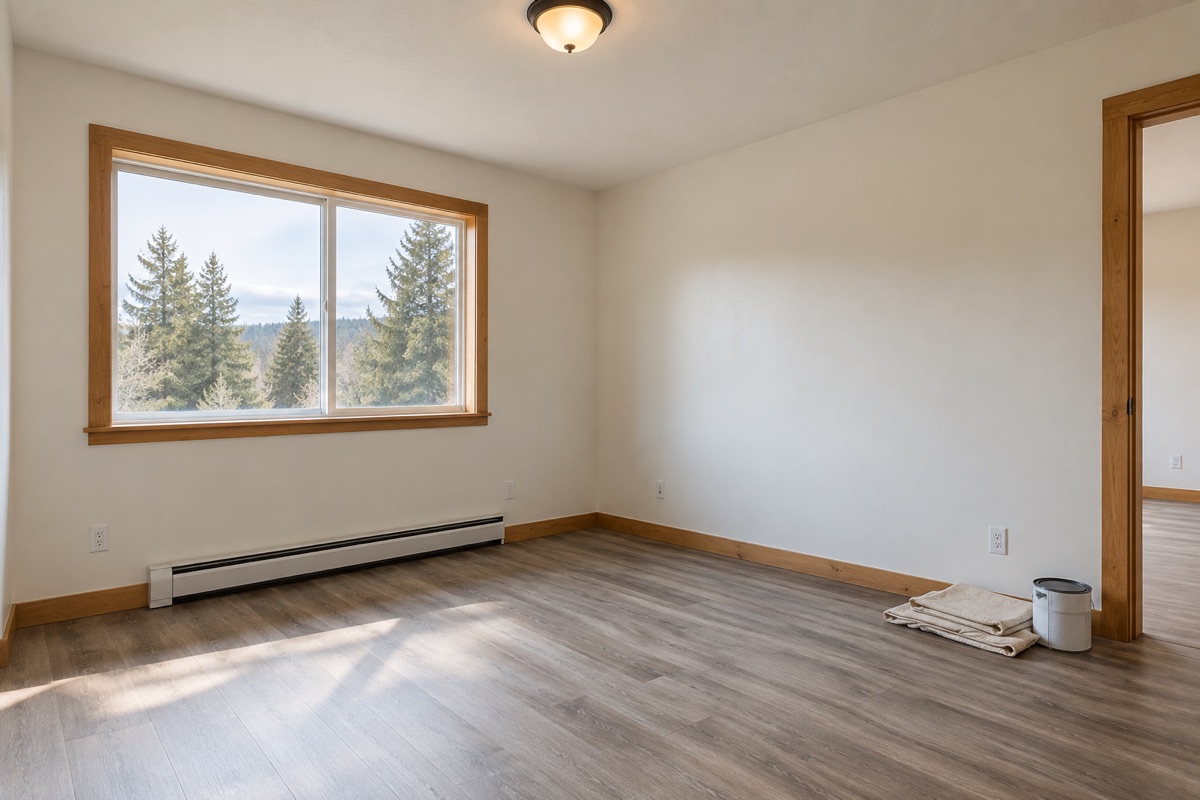
A shorter list can be a better project.
Start with the things you use or notice every day: a door that catches, damaged trim, walls ready for paint or flooring that needs attention. Put the must-do items first, then separate the improvements you would like to consider if the scope allows.
- Drywall patches and surface finishing
- Painting for individual rooms, walls, ceilings and trim
- Interior doors, baseboards and hardware
- Selected flooring and modest room updates
- A grouped repair list before a move or a change of use
Keep what already works.
If the layout suits your home, say so. Keeping it can help focus the conversation on finishes and everyday use. Tell us which materials or features you want to retain, and where a close match matters more than a complete replacement.
A photograph of the whole room, a close-up of the detail and a plain description of the result are useful starting points. You do not need to know how the repair should be done before you ask.
Plan for the household as well as the work.
Include occupied rooms, pets, furniture, parking and the times someone can provide access. Discuss who clears the work area, who supplies materials and whether waste removal is part of the scope. Settle those details before choosing the date.
Small work still needs clear boundaries.
Active leaks, recurring cracks, suspected structural concerns and building-system changes need attention beyond a cosmetic finish. Describe what you have observed so the right scope can be considered. A paint or trim request should not conceal a larger unresolved issue.
Organize your home repair list